The 3D Visual / AI Experts
Your models are stuck in CAD.
Your buyers want to see it in 3D.
We're here to help.

THE HARD PARTS //
What slows 3D Visual teams down…
Models too heavy for the web
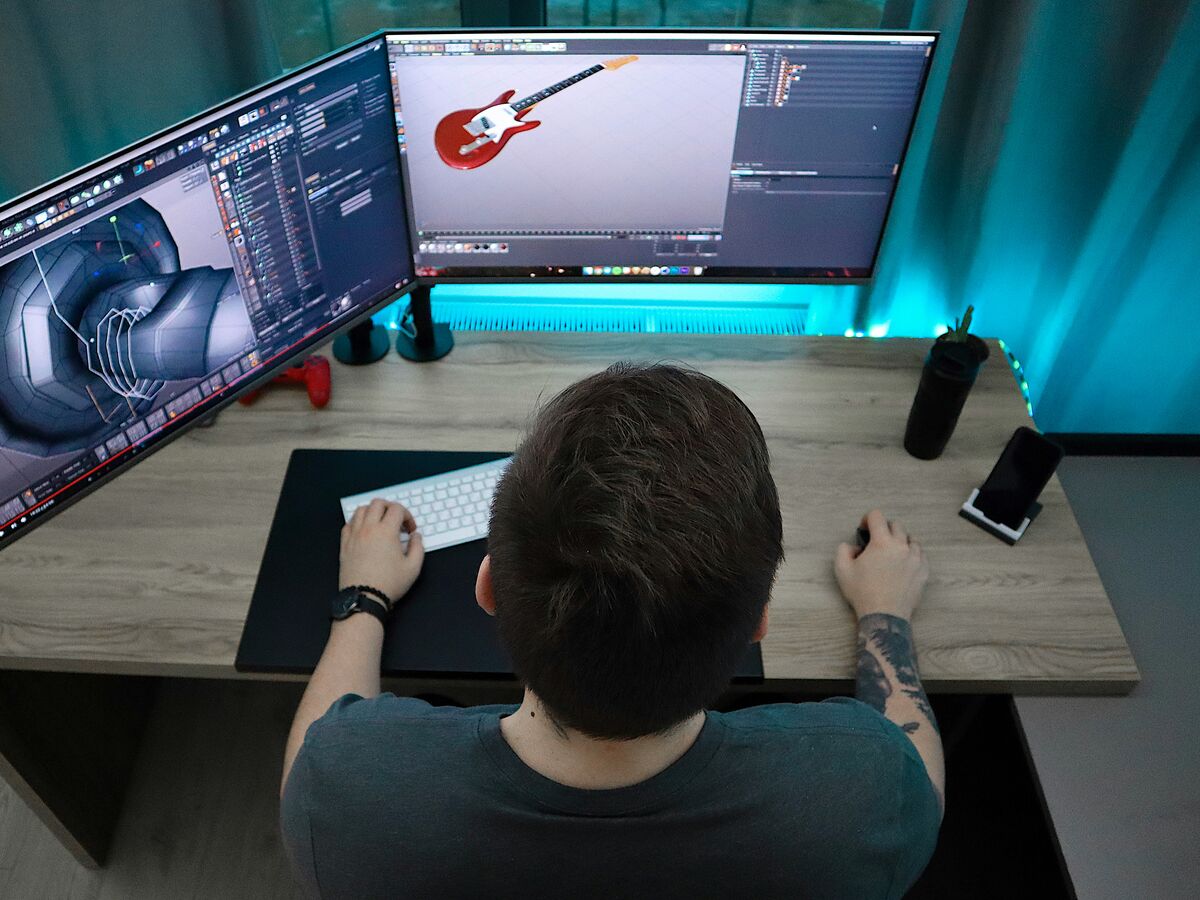
Your engineering models are built for precision, not for a browser. A single assembly can run to millions of polygons and hundreds of parts, with materials that only render inside the desktop tool. Exported as is, it takes minutes to load on a laptop and crashes on a phone, so sales and marketing fall back to flat images and screenshots.
CAD and marketing drift apart
Engineering changes a part in SolidWorks, and the product page still shows last quarter's version. Marketing keeps its own copies of the models, retouched by an agency, with no link back to the part numbers in PLM. Every revision means another round of exports and re-renders, and nobody can say for sure which image matches what ships.
Configurators that can't price
Your configurator lets buyers pick a color and spin the model, but it doesn't know which options are compatible or what they cost. The rules live in a spreadsheet, the prices live in the ERP, and someone checks the two by hand after the order arrives. Buyers order combinations you can't build, and your team spends days fixing quotes.
Renders that take days
A new product line needs hundreds of images: every color, every size, every angle, in lifestyle scenes and on white. Each one goes through a render queue or a photo studio, and a single change to a part starts the cycle again. Launches wait on assets, and your 3D artists spend their week on variants instead of new work.
175
Projects Delivered
Web platforms, AI systems, integrations and security programs shipped to production for startups and enterprises. Counted when they go live, not when the demo works.
25
Years in Business
Twenty-five years of shipping software, through every platform shift from the web to mobile, cloud and now AI. Long enough to know which shortcuts cost you later.
$80m
Assisted Capital Raised
Capital our clients have raised with products, prototypes and technical due diligence we helped build. Investors fund what they can see working.
CAD & 3D PIPELINE INTEGRATIONS
Your 3D data starts in tools built for engineers. SolidWorks, AutoCAD, Revit and Blender each export in their own formats, with their own units, layers and naming. Getting a model from there to a web page, a catalog or an ERP record usually means a person exporting, cleaning and renaming files by hand. Every manual step is slow, and each one is a chance for the web version to stop matching the part that ships.
We build pipelines that pick up models when they are released, convert them to glTF, reduce polygon counts and compress textures for the web, and run automated checks for scale, missing materials and broken geometry before anything is published. Part numbers and attributes flow to PLM, ERP and your ecommerce catalog with the model, so every system points to the same revision. Each run is logged, and a failed check stops the release and alerts your team instead of shipping a broken file.
WEB CONFIGURATORS & DIGITAL TWINS
A 3D viewer is easy to demo. A configurator that sells is harder. It has to load fast on a phone, show only combinations you can build, and price each one from the same rules your ERP uses. A digital twin has the same problem in a different form: the model is only useful if it reflects live data from the equipment or building it represents, not a snapshot from installation day.
We build browser 3D with WebGL and WebGPU in React and TypeScript, tied to your product rules and pricing so every option is validated and priced as the buyer chooses it. Buyers can preview products in their own space with AR on their phone, and finished configurations reach your CPQ, ERP or cart as valid orders. For digital twins, we connect the model to sensor data and show status, alerts and history in the same view. Load times and errors are tracked on real devices.
AI FOR 3D CONTENT
Generative tools can now draft a 3D model from a sketch, a photo or a sentence, and render a product in any scene. The results are often close but not right: proportions are off, details are invented, and a generated part can look correct while matching nothing you make. Your asset library is a separate problem. Thousands of models and renders sit in folders, with filenames as the only way to find them.
We use text-to-3D and image-to-3D models to draft concepts and placeholder assets, and generate color, material and scene variants from your approved models so renders don't wait in a queue. Vision models tag and describe your existing library so your team can search it by shape, part or style. Every generated asset is labeled as generated, compared against the source model and approved by a named reviewer before it reaches a product page or a customer.

MORE INDUSTRIES //
We also build for…

Cybersecurity
Close the ordinary gaps attackers use, from leaked secrets to public buckets.
Explore →
Regulatory Compliance
Make audits routine with controls in code and evidence collected continuously.
Explore →
Healthcare
Connect to the EHR, handle PHI correctly and put AI where clinicians can check it.
Explore →
Fintech
Fraud models, KYC and payment systems that stay accurate when volume spikes.
Explore →
Construction
Connect field and office, and put AI to work on drawings, RFIs and daily logs.
Explore →
Ecommerce
Storefronts that hold up at peak, with inventory, fulfillment and payments in sync.
Explore →
ERP & CRM Integrations
Systems of record that agree with each other, and AI that works from them, not exports.
Explore →
AI Training
Teach your team to use AI well, and train models on your data with evals that prove it.
Explore →3D Visual
Get your 3D models out of CAD and into the browser, in sync with your product data.
Explore →RESULTS DELIVERED //
Our client roster has included…



TECH MASTERY //
Our Trusted Tools…